Prepare for Battle
The demon is real, but we must draw it out, confront, and leverage it

The Davenport Dissolve: A Marriage That Forgot Its Own Story
Emily and Jack sealed the deal in the Scott County courthouse, 2013, reception at the Elks Lodge, venison chili bubbling in three slow cookers, kids ricocheting inside a rented bouncy castle. Emily, thirty-three, guidance counselor at Central High, grew up in a ranch house off Brady Street where her mother taped Oprah every afternoon and played them back like bedtime stories. Jack, thirty-five, second-shift foreman at the Deere parts plant, still keeps his father’s 1986 Topps set sealed in the original shrink-wrap. They met at a parent-teacher conference; he was there for his nephew. First date was Culver’s after a Friday night football game. Normal Midwestern.
The trouble arrived the way rust creeps under paint, slow, invisible, then suddenly everywhere. No affairs or grand betrayals, just a low-grade ache Emily couldn’t name. She tried the usual remedies: a new ladies’ Bible study, a thirty-day Zoloft trial, a Peloton wedged between the water heater and the Christmas boxes, but nothing moved the needle.
Then the algorithm took an interest.
It began at two in the morning on the couch, phone glowing like a coal: a reel, a therapist in a beige sweater, voice soft as flannel, text overlay “You’re not crazy. You’re exhausted from carrying the mental load.” Emily saved it. Next night: “If he doesn’t text back within an hour, it’s not ‘he’s busy.’ It’s control.” Then a clip from Kramer vs. Kramer, Ted missing the pediatrician, Meryl’s face folding in on itself. Caption: “This is what emotional neglect looks like in real time.”
She wasn’t political or even formally overeducated. She’d voted once, for the school levy. But the memes didn’t require ideology; only recognition. Jack did forget the oil change. He did fall asleep during her recap of the IEP meeting. He did say, “You’re fine,” when she said she was not. The clips didn’t register as propaganda. They felt like memory.
At home the temperature shifted.
Text at 6:14 p.m.: “You didn’t even ask how the parent meeting went. Typical.”
9:42 p.m.: “Guess I’ll do the dishes again. Shocker.”
11:07 p.m.: “You’re snoring. I’m wide awake. Thanks.”
Jack finally caught up to read a backlog of messages in the break room the next day, typed “Sorry, rough day,” then deleted it. He came home to silence, Emily already in bed, phone glowing face down on the bedside table.
At book club, at the kids’ soccer games, at Hy-Vee checkout, she was fine enough. “Jack’s swamped at the plant,” she’d say, touching a friend’s arm. “I’m hanging in there.” Friends offered support in her time of crisis: “He’s lucky to have you handling everything.” “Men, right? They’re selfish.” “You carry the whole load, Em. It’s not fair.”
No one saw the shouting. It happened often enough, behind closed doors, always after everyone was gone, the kids in bed. “You never listen! Ever!” she hissed. “I’m trying, Em-” “Trying looks like nothing! You’re checked out! Our whole marriage-” The kids learned to sleep through it. Jack learned to lower his voice, to say “Okay” until she wore herself out. By morning she was humming in the kitchen, pouring cereal, asking blankly if he wanted coffee.
The argument started over a forty-seven-dollar overdraft fee. Emily had forgotten to move money from savings. Jack, tired after a shift, said, “We talked about this.” She fired back: “You mean I talked. You just nod and forget.” He raised his voice, rare but real. “I’m killing myself out there, Em!” She kept pushing. He grabbed the nearest bowl from the counter, and hurled it at the wall. It shattered, sending fragments scattering about, behind the stove, into the sink.
Silence.
Then: “See? This is what I live with every day.”
He stared at the mess, hands shaking. “I didn’t throw it at you.”
“You threw it near me. Same thing.”
He cleaned it up, went to the garage, sat in the dark until three.
That bowl became the centerpiece of the Timeline.
Photo of plastic shards on her phone.
Voice memo: “He threw something at me tonight. I’m scared.”
Prompt: “Draft an incident report for a domestic disturbance involving thrown objects.”
The model delivered: “Subject exhibited loss of control, endangering emotional and physical safety of spouse and minor children.”
She told her friend, the school social worker first. “It’s emotional abuse. He withholds affection, controls the money, gaslights me constantly. And now he’s throwing things.” The empathy expert nodded, handed her a pamphlet. She told her sister. “He’s not violent, but the neglect… and the bowl. It’s escalating.” She told the moms at pickup. “I’m in survival mode. Pray for me.”
No one saw any evidence. Jack still packed the kids’ lunches, still kissed her goodbye, still left twenty dollars on the counter when the grocery budget ran short. But Emily had the Timeline now, AI-polished, airtight.
The LLM was just a tool at first. “List 10 signs of covert emotional abuse in a middle-class marriage.” She highlighted three. “Draft a journal entry about feeling unseen after 10 years.” The output was better than her own words. She fed it screenshots, his “k” replies, the photo of him asleep with the TV on, the cracked plastic. It stitched them into: “Pattern of dismissal, minimization, and emotional withdrawal culminating in physical intimidation.”
Jack noticed the distance but misread it. He brought home Hy-Vee sushi on a Wednesday, left a Post-it: “Date night?” She responded with a thumbs-up emoji and a link to a podcast about “toxic stress.” He listened to half, and fell asleep in the recliner.
The lawyer scanned the folder, nodded. “Textbook coercive control. The bowl seals it. We prove impact, not intent.”
Jack’s deposition: Tuesday, beige room, burnt coffee. He wore the wedding tie. When the lawyer read from Emily’s journal, “He threw a bowl at the wall after I cried about Dad’s surgery,” Jack looked at her like she was speaking a foreign tongue. He didn’t remember the surgery. He remembered the overdraft. He remembered the bowl.
The judge, Hon. Carla M. Jensen, forty-eight, appointed at thirty-nine after a decade in the county attorney’s office, chambers lined with framed certificates from women’s leadership retreats, a discreet silver pin on her robe shaped like a broken chain, listened without expression. She didn’t need advice or lifelong learning, She was the curriculum. “The court credits the petitioner’s subjective experience,” she said, voice level, eyes on Emily. “A single act of intimidation in the home is sufficient to establish a pattern when viewed through the lens of cumulative emotional harm. Protective order granted. Credible threat to safety.”
Jack moved to his brother’s basement. Emily kept the proceeds from the house, the van, the kids. She posted nothing. Changed her profile to a photo of the dog.
Upon receipt of formal judgment she opened the chatbot. “Write a letter to my younger self about leaving a marriage that felt safe but wasn’t.” It flowed beautifully. She read it, closed the app, and stared at the kitchen table where Jack used to do the crossword in pen. Funny, the same ache was still there. Only now it had a name, and a court order.
Maybe it’s no shock to hear the above was generated entirely with a few clumsy prompts fed into an LLM.
The proper experiment would be to take these prompts and track their output over the next couple of years, but let’s face it: We’ve seen enough to know what it is, and what’s coming. It’s overhyped and part of a massive scam today. But in your lifetime, it eventually won’t be.
Yes, it’s lacking a voice, yes it never looks as deeply as we can. Details are lacking, characters are heavy-handed and awkward, what should have contour is flat. You did it, you caught the lie! But is there perhaps part of the lie you didn’t catch?
The first wave of AI is a bar-lowering technology, a quickening. Less time, less emphasis on quality. We’re converging; our powers of discernment aim downward, while the robot surges upward to fool us more often at first blush, and eventually, sooner than you probably think, we collide somewhere in the middle.
Shortly after that the robot will get “better,” and “still better” shortly after that. But we’ll likely get worse, due to outsourcing a generation or two of normal human development and problem-solving skill to the all-consuming data center.
The arguments will mount, calls to regulate, curtail, and destroy AI will get louder and more panicked, a rising unemployment rate will stoke the anger. You’ll live to see horrors beyond your comprehension, etc.
And yet after a few years of grappling with both the questions and the technology itself, I cannot but derive one clear answer: It’s ALL ONE THING.
The subject of the short story about a marriage is based on a thesis: The first waves of AI are not just shiny toys, but in the decreasingly personal lives of humans they’re a confirmation bias machine which uncannily resembles another such machine we’ve known for a long time, since the dawn of man in the garden. A machine with answers to an age-old question:
Someone please tell me why I am in pain?
The tools are biased toward lying, overconfidence and resembling authority. Whether or not they were programmed by underdeveloped narcissists has never mattered less, because of the bias inherent in the technology. The bias is Moore’s law, the bias is speed, solutionism, comfort, frictionless existence. The bias is no death, no marriage, no work. The bias is human life in a redacted, simulated state. For the majority of my days I’ve been inclined to disbelieve in hell as a subterranean lake of fire, but rather a smooth white cyc concealing a mountain of mangled bodies, acoustically dampening the din of writhing pain and torture. Not a place we go after death, but a future time period here on Earth.
And yet, the news is not all bad. Because it’s all one thing, the technology contains an accessible lesson: We HAVE seen this movie before, in the form of ideology. As collectivism, as communism. As the globalist push for one system aligned to one truth. At the risk of oversimplifying the issue, it’s fair to say “leftist” ideology is the serpentine voice of temptation: “It’s not your fault. The system did this. If only you could know more, you would surely attain true enlightenment and peace.”
We do fortunately have a history of resisting this temptation.
Every form of self-help lit and therapy culture is also a leftist construct, a way to defer personal responsibility and explain ingrained human longing and a life of suffering as the fault of systemic errors, other people, those who undeservedly attained the power by stealing it. Our focus leads us away from the local to the global as part of this self-soothing, as those close to us seem like nothing but trauma vectors.
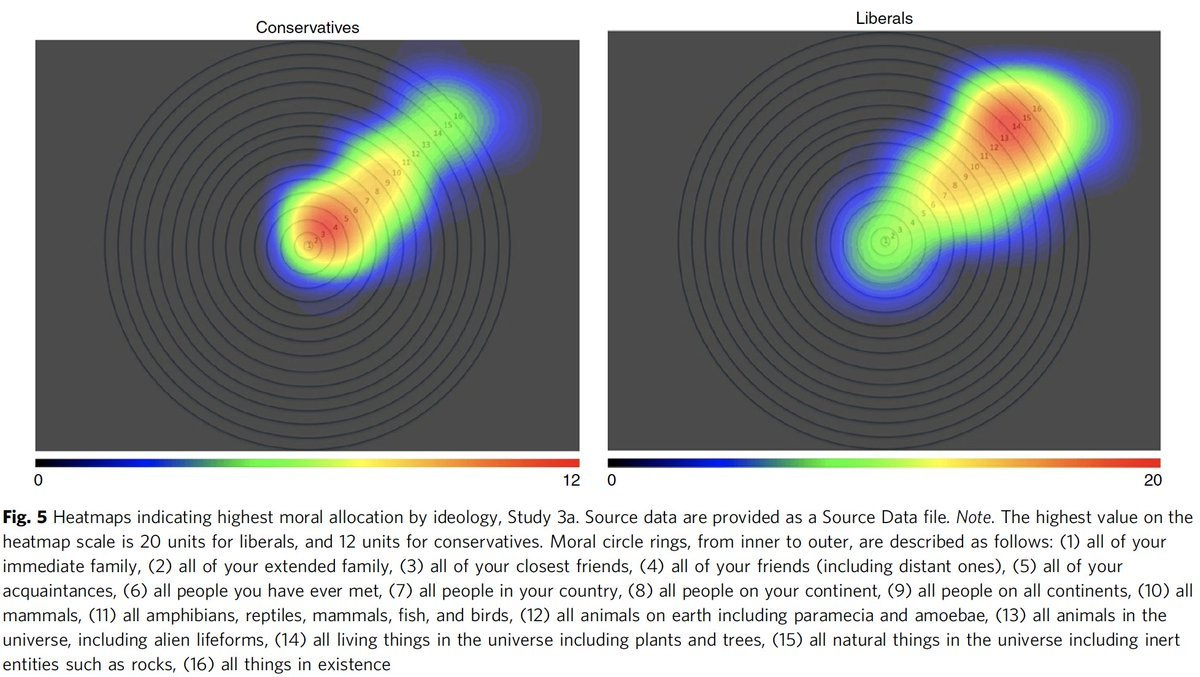
Frankl’s Man’s Search for Meaning doesn’t directly address the idea of confirmation bias or the modern ways of thinking about survivor bias. But he does explain will to meaning as the key driver of human life. To recognize the inevitable trajectory of the apple in the garden is to confirm the simple concept of will to meaning, probably synonymous with the will to power.
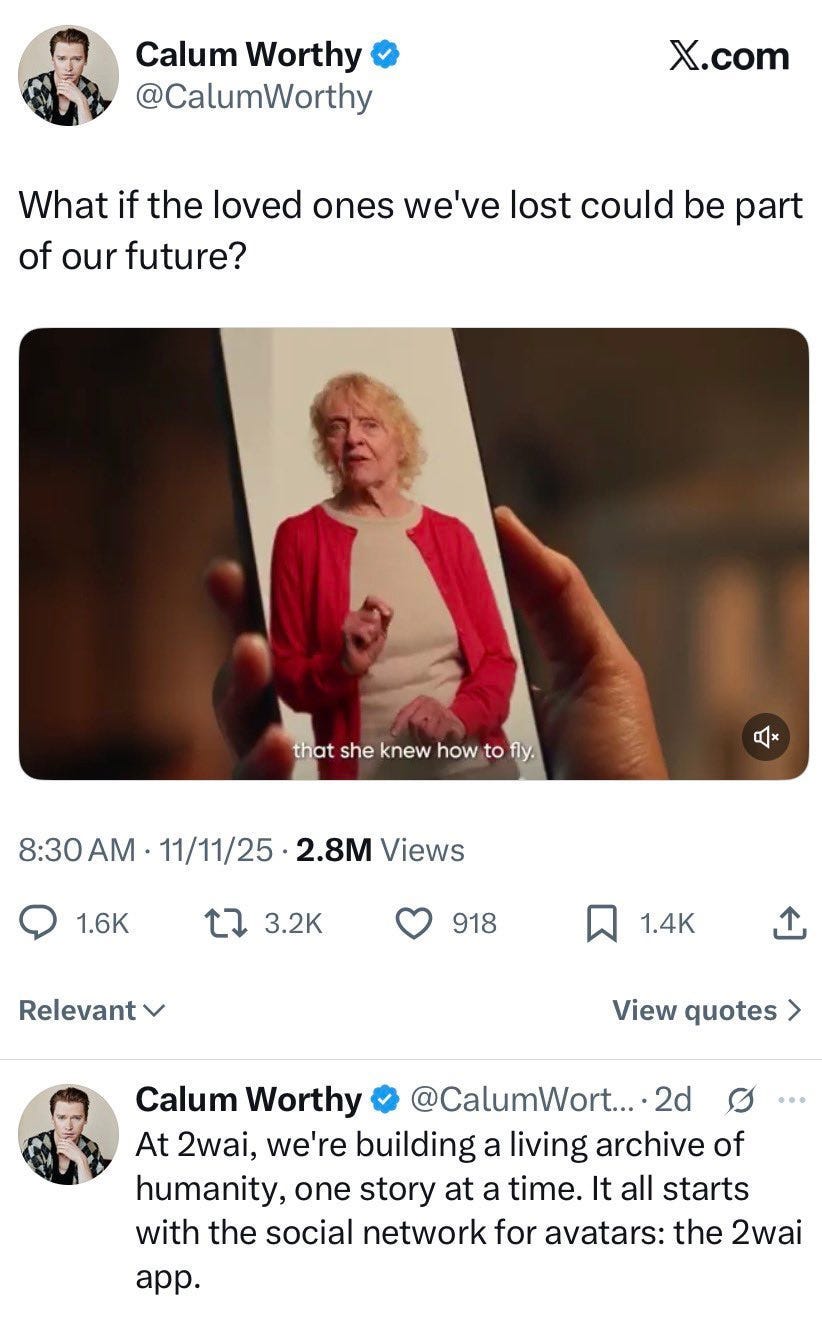
So why is it only in the most visceral examples of literal AI necromancy like “Forever Grandma” we’re willing to call it demonic? Is it a fear we’d be exaggerating, or sounding like religious nuts? The material is cut from the same cloth, the indulgence is the same shameful kind, all signs point to a narcissistic, gutted spiral of death and destruction… and yet, what does it really mean when something is demonic? Surely something we avoid, and turn away from? Or is it rather something to be engaged with, understood, leveraged? Satan is no equal to God, so what do we have to fear?
Do we guess we’re no match for demonic influence?
I can tell you from experience it’s a good rule of thumb not to play with Ouija boards. But a battle with the demon at this point appears to be all but inevitable, the thing we’d rather never do, yet are left with no other choice. I used to advocate for disengagement, until I decided to engage. Today I see things differently.
TOWOIT (The only way out is through.)
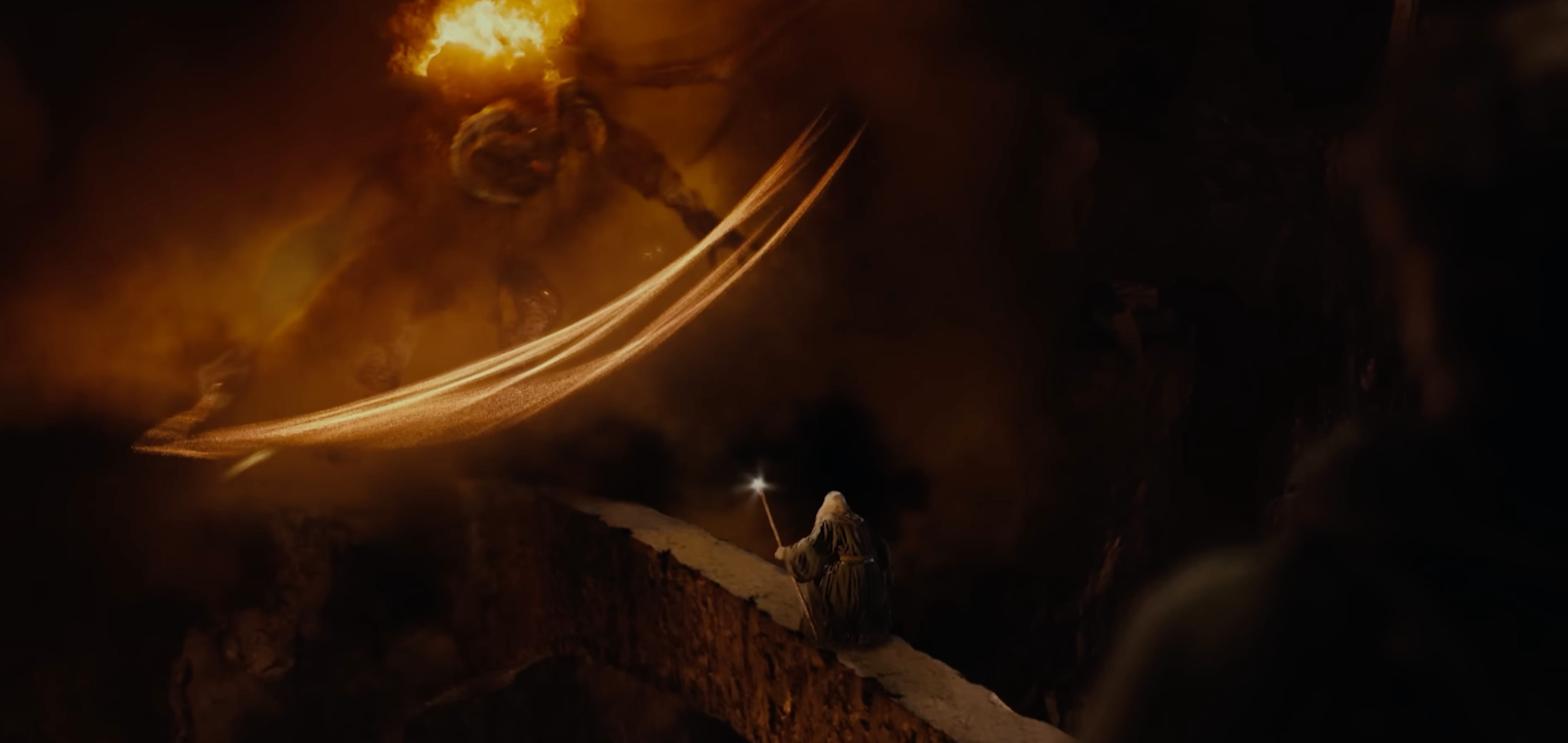
It’s in the water, the food, the books, and media. The sustenance we raise our children on, the poorly crafted foundations of relationships and marriage, the sand we’re currently building institutions on. Most of it boils down to this will to meaning, overindulgence on information, and the increasing comfort of finding cherry-picked faults in everyone and everything but yourself. Yet it is now our last hope to hear the charge, find the fault, and defeat it.
Tricky business. We may in fact have to accept a form of destruction to rebuild again. While so many in the evangelical set prefer to disengage, shield the family and prepare for tribulation, it seems obvious now the key lies in a fundamental Biblical truth: Knowing every one of us contains the same ingredients of that conflicted and battered creature we see emerging.

That everything we foresee in the shortening path toward technological singularity is the oldest story in the book, with nothing new under the sun. But also that the sun renews the world every single day, just as it has from the beginning.
You’re simply going to have to find a way to use the robot for good.